


Making the Work Trustworthy
Suggested Reading: Part 5: Be Credible — Chapters 19 and 20
Overview:
Chapter 19 names the three zones of credibility: fact (what the record explicitly states), inference (what the evidence supports through responsible interpretation), and imagination (what you supply to create a reader experience). All three belong in family history writing. The problem is leaving a reader unsure which one they are reading. Chapter 20 is the Author’s Note in full — what it is, when to use it, what to put in it, and where to place it. An Author’s Note completes a scene. It gives the reader the information they need to trust your writing.
This issue is about the transparency that turns good writing into trustworthy stewardship.
Prompt:
Go back to the scene you wrote last week — or to any piece of family history writing you consider finished.
Work through the piece in three passes, using three highlight colors. You can do this digitally on Google Docs, Word and now apparently on Substack.
Green for facts: statements the record explicitly supports and you can cite directly.
Yellow for inferences: conclusions that are reasoned and grounded, but not stated outright in any document.
Orange for imagination: sensory detail, interiority, atmosphere — what you supplied to make the moment tangible for the reader. .
Once each type of text in the piece is highlighted, go back through the yellow and orange passages. For each yellow passage, note the source that grounds the inference. For each orange passage, note both the source it rests on and the reasoning that made it plausible. Be transparent about what you’ve imagined. That puts discernment in the hands of the reader while providing them with compelling passages.
Why all the highlighting? It makes facts, inferences and imagination very visual and easy to work through. It also can serve as your own feedback as to the balance of your family history story. Lots of green means you’ve included a lot of facts, but is it a compelling story? Lots of orange can signal you’ve leaned in too much to telling the story and not provided facts that serve the reader. Are your inferences showing up in the story?
The colors and the action you take in documentation become your Author’s Note. Once you have your Author’s Note in place you can remove the highlighting.
No chat this week. I’ll be on my way to Hawaii when this posts. Aloha! 🌺
Get the book:
Stewardship Matters: A Storyteller’s Guide to Preserving Family History.
Get: Ebook PDF (With Paid Subscription to GenStack Coterie).
Get Paperback: Paperback (Buy on Lulu)
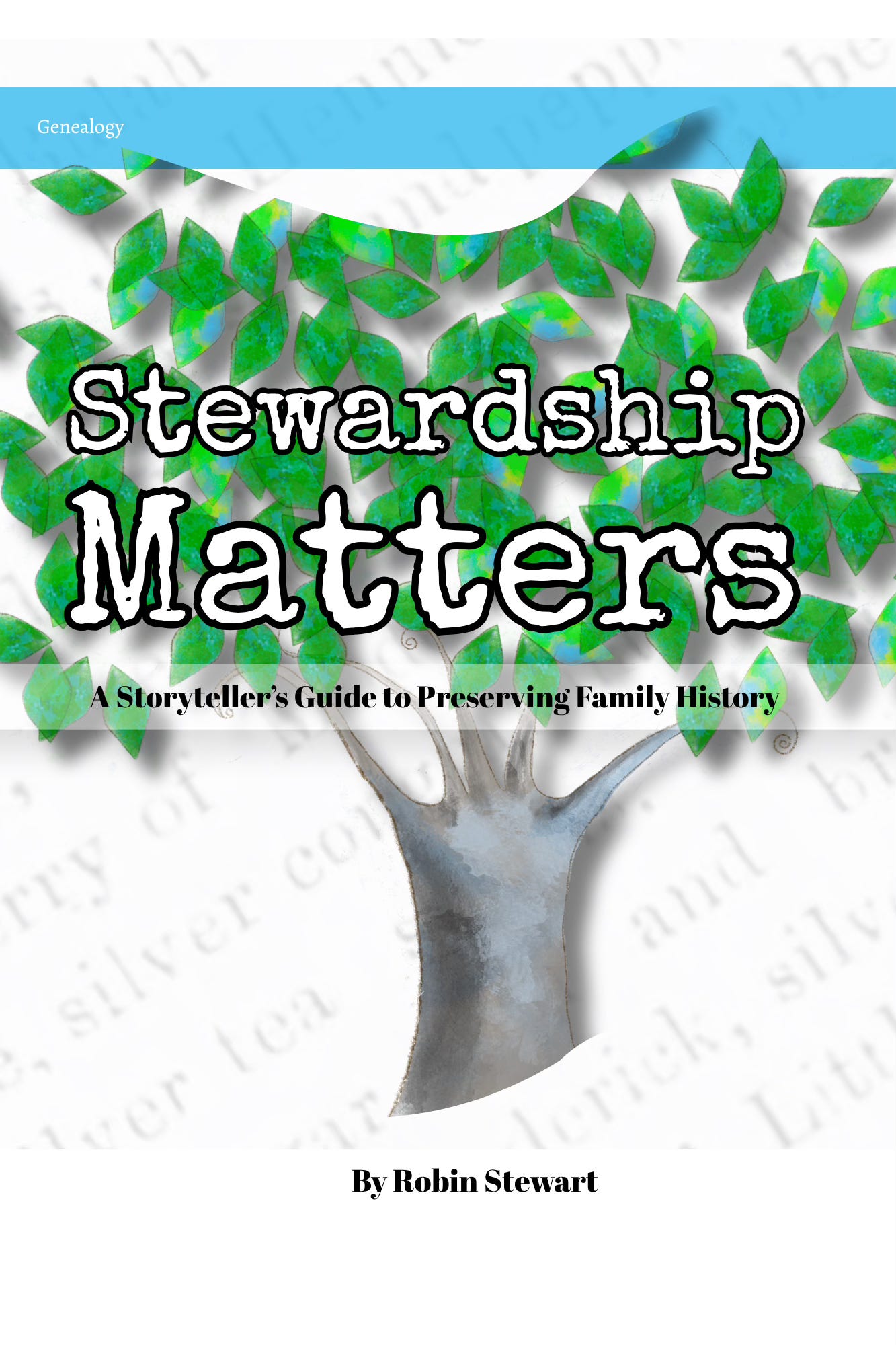
Paid subscribers to Genealogy Matters or GenStack Coterie have access to the digital version.
Submit to Genealogy Matters Magazine:
Your family history writing, including articles previously published on Substack or your blog is eligible for submission to Genealogy Matters Magazine. Review the submission guidelines and submit to Genealogy Matters Magazine.
Have a great time in Hawai'i!