

Writing the Scene
Suggested Reading: Part 4: Write The Stories — Chapter 18
Overview:
Note: This is a writing prompt drawn from some basic writing information provided in the book. If you’re looking for comprehensive writing instruction, specifically for family historians—
I recommend From Research to Novel with Aryn Youngless
Chapter 18 is the craft chapter, the one that introduces the idea of writing a scene. A scene is not a summary. It places a reader inside a specific moment, in real time, with something at stake. It has a turn: something that changes by the end. It uses sensory detail as a mechanism, the way physical specificity creates the sensation of being present. It enters late and leaves early.
This issue gives readers the tools and a template. It also names the nonfiction constraint: you are not writing fiction. You are restoring what the evidence makes plausible, with an Author’s Note that marks what you know, what you infer, and what you imagine.
Prompt:
Use the scene guide from Chapter 18.
Choose the story you identified last week. Name the moment — as close to the turning point as possible. Name your evidence anchor: the record, photograph, letter, or artifact that grounds it. Then write the scene: 600–900 words, in the story now, not summarized. Enter late. Leave early.
Once you have written the draft of your story, find a Coterie friend and ask them to give you feedback on the story. We can always benefit from the kindness of someone willing to be honest with us. What’s missing? What am I not seeing that is needed?
For the chat this week, use it to find a Coterie friend to give you feedback. Reaching out to the community strengthens your resiliency as an author, provides you with some private wisdom that you can take or leave, and could possibly improve your story.
And if you see a Coterie member seeking feedback, reach out. The power of this community we have all built together has always been rooted in our collective kindness.

Something to keep in mind for the future:
One way to preserve your story for future generations is to submit it to Dear Descendants in Genealogy Matters Magazine. The long game of the magazine is to upload each issue into the Internet Archive for safekeeping until it can be handed off to the future. You can absolutely do this yourself without adding it to the magazine, and that is the point of this Storyteller Project, to write, publish, preserve and make your family history stories findable. However, the magazine is way to attach your stories to a community-based collection, and also avoid some of the overwhelm of doing it yourself.
Learn more about Dear Descendants.
Get the book:
Stewardship Matters: A Storyteller’s Guide to Preserving Family History.
Get: Ebook PDF (With Paid Subscription to GenStack Coterie).
Get Paperback: Paperback (Buy on Lulu)
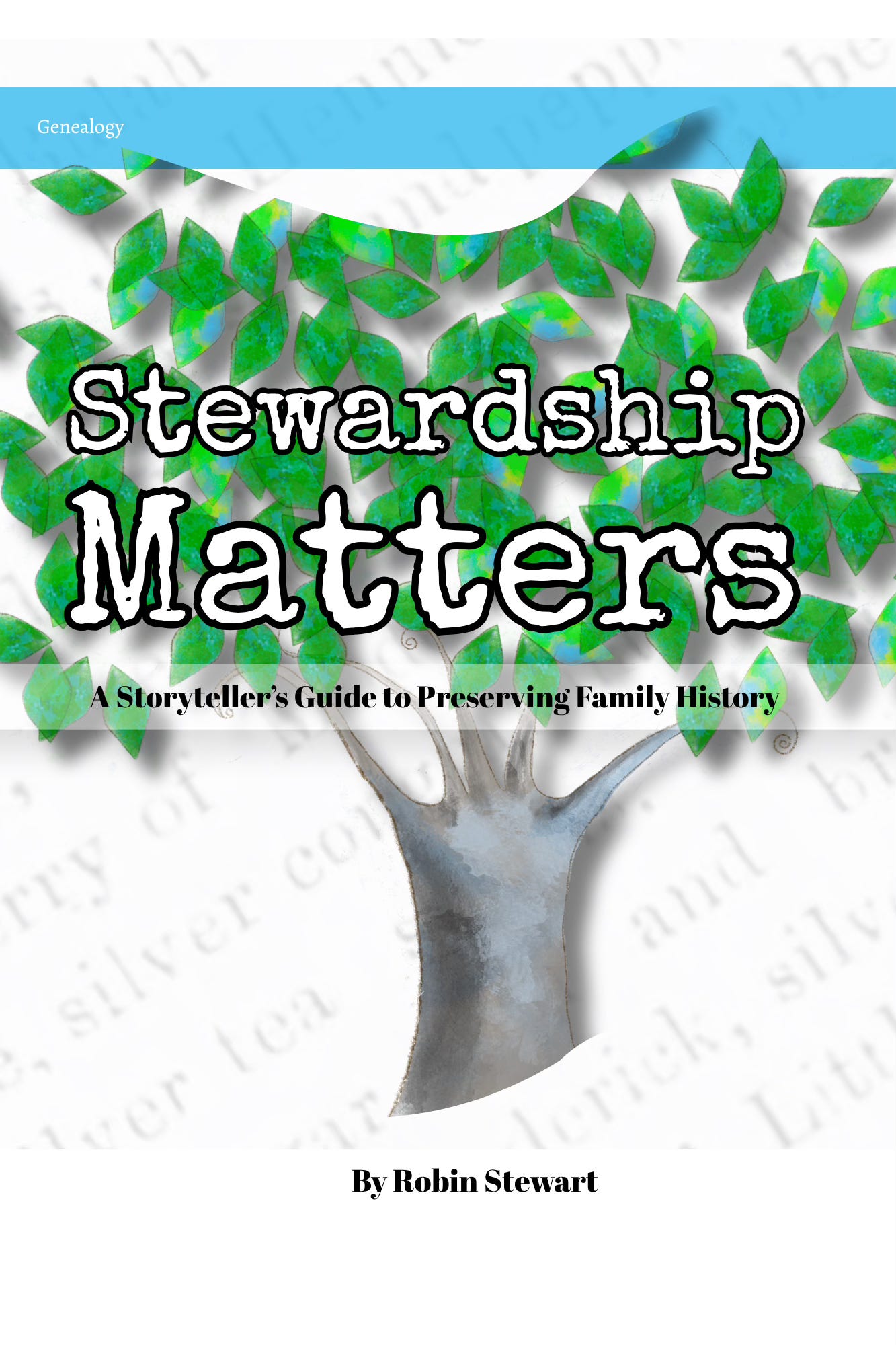
Paid subscribers to Genealogy Matters or GenStack Coterie have access to the digital version.
Submit to Genealogy Matters Magazine:
Your family history writing, including articles previously published on Substack or your blog is eligible for submission to Genealogy Matters Magazine. Review the submission guidelines and submit to Genealogy Matters Magazine.